
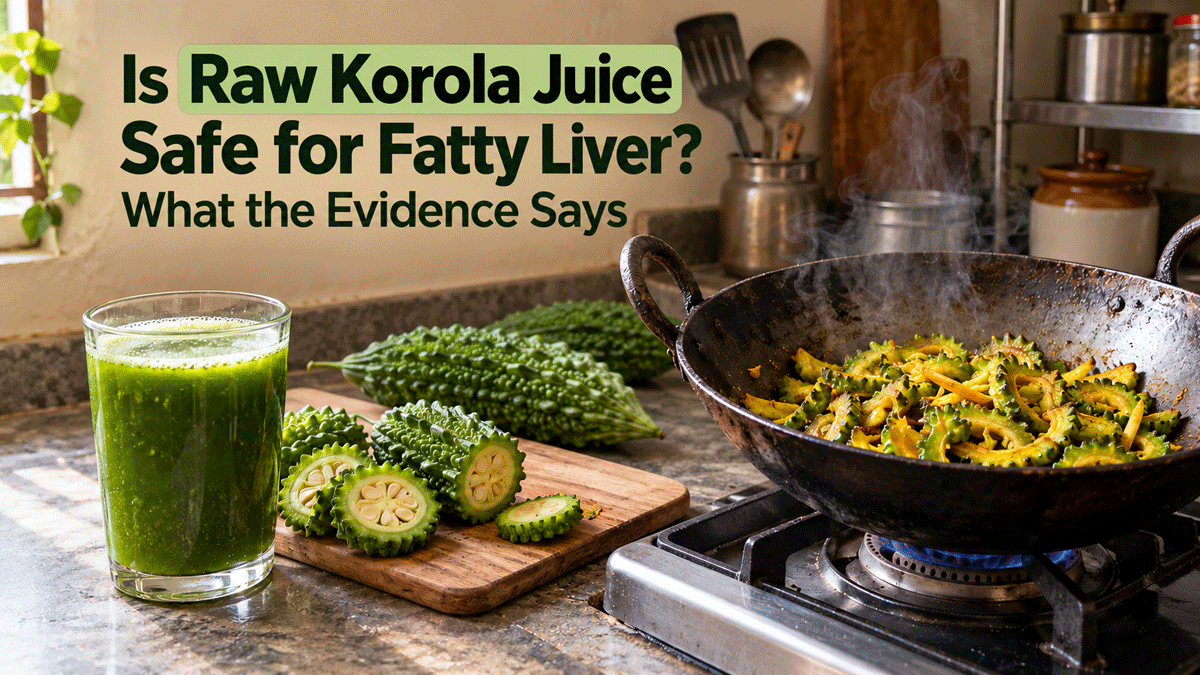
Raw korola juice cannot be assumed safe or effective for everyone with fatty liver. Research on particular bitter-melon preparations does not establish that a homemade drink removes liver fat, reverses scarring or safely replaces diabetes treatment.
A relative may recommend it before breakfast because the vegetable is familiar: “It lowers sugar, so it must clean the liver.” If you are wondering, “Is raw korola juice safe for fatty liver?”, separate those two claims before changing your routine.
Is Raw Korola (Bitter Melon) Juice Safe for Fatty Liver?
While cooked bitter melon (korola) is a nutritious vegetable, drinking concentrated raw korola juice daily is not proven safe or effective for reversing fatty liver and carries risks of gastrointestinal distress, hypoglycemia, and liver enzyme spikes in sensitive individuals. True fatty liver reversal requires eliminating dietary fructose, seed oils, and chronic hyperinsulinemia rather than consuming harsh raw extracts.
- Phytochemical Potency: Raw extracts contain vicine and charantin, which in high unmonitored doses can irritate the digestive tract.
- Hypoglycemia Risk: In individuals taking glucose medications, concentrated bitter melon can cause sudden, dangerous blood sugar drops.
- Root Cause Focus: Reversing hepatic steatosis requires low-carb nutrition and intermittent fasting to drain stored liver triglycerides naturally.
Are cooked korola, raw juice and an extract interchangeable?
No. A dish, a homemade drink and a manufactured extract can deliver different plant materials and concentrations; evidence about one preparation cannot simply be transferred to another.
Korola is also called bitter gourd or bitter melon. The NIH Office of Dietary Supplements explains that botanical extracts are prepared using liquids such as water or alcohol to extract particular constituents, and may then be dried for capsules or tablets. NIH botanical preparation guidance.
Consequently, a capsule weight is not a recipe for an equivalent glass of juice. The plant part, extraction method and concentration matter, not just the name on the front of a container.
Consider a hypothetical comparison: one person cooks a portion with lunch, another blends several fruits into a drink, and a third takes a concentrated capsule. Calling all three “taking korola” hides the information needed to compare either research or safety.
When discussing korola juice and blood sugar, first describe the actual preparation. How much fruit goes in, are seeds included, what else is added, and how often is it consumed? Those details define the proposal more clearly than a phrase such as “one natural drink.”
Is charantin a form of plant insulin?
No. Charantin is a mixture of plant compounds, not prescribed insulin, and the phrase “plant insulin” does not establish an equivalent treatment or dose.
The Korean extract study discussed below distinguishes charantin, a mixture of steroidal saponins, from polypeptide-p, an insulin-like protein also discussed in bitter-melon research. Different compounds should not be merged into one ingredient merely because an advertisement uses a convenient label.
LiverTox also notes that the constituents responsible for bitter melon’s glucose-lowering effects and its precise mechanism are not established. Laboratory activity is a reason to investigate a preparation, not a finished instruction for treating a person. LiverTox bitter-melon review.
Read a mechanism claim as the beginning of a question. Which substance was tested, in what preparation, by what route, and with what measured result? If those details disappear between the research and the sales pitch, the explanation has lost something essential.
This distinction is particularly useful when evaluating claims about bitter gourd benefits for diabetes. Naming an active compound sounds precise, but precision also requires evidence that the proposed product, amount and use produce the promised clinical outcome.
What have human diabetes studies actually found?
Human studies show mixed, preparation-specific findings rather than a dependable replacement for established diabetes treatment. The size, duration and outcome of each trial matter.
In a four-week randomized trial, three doses of dried bitter-melon fruit-pulp preparation were compared with metformin. The highest bitter-melon dose improved fructosamine, a glucose-related blood marker, from baseline; the smaller doses did not show a statistically significant change, and the investigators described the effect as modest. Fuangchan and colleagues’ trial.
This does not provide a daily raw-juice prescription or establish equivalent long-term diabetes protection. A trial of a measured preparation over four weeks cannot answer every question about ordinary home use.
A separate three-month placebo-controlled trial added a capsule preparation to standard treatment in 40 people with type 2 diabetes. It did not demonstrate a statistically significant advantage for HbA1c; the authors said the small trial could not support a definite conclusion about effectiveness. Dans and colleagues’ capsule trial.
Neither result should be exaggerated. A small, inconclusive study does not prove that every preparation has zero activity, while a positive finding for one marker does not prove that a drink can replace medicines or prevent complications.
Do glucose findings show that korola treats fatty liver?
No. A change in blood glucose is a different outcome from a demonstrated change in liver fat or fibrosis, and the relevant human extract trial was not a fatty-liver treatment trial.
A 12-week Korean study randomized 76 people with prediabetes; 65 were included in the final analysis. It reported improvements in some glucose-tolerance measurements, but no significant improvement in its reported HOMA-IR measure of insulin resistance. Korean prediabetes extract trial.
People with cirrhosis, chronic hepatitis and specified liver-test abnormalities were excluded. Those exclusions limit how confidently its findings can be applied to people with existing liver disease.
The 2023 LiverTox review did not identify established clinically apparent liver injury attributable to bitter-melon extracts. That is useful safety information within its scope, but neither universal reassurance about every product nor evidence of liver healing.
Imagine a hypothetical claim that a lower glucose reading after a drink proves the liver has recovered. Even if the reading is accurate, the conclusion does not follow: the advertised outcome was never measured.
Our fatty liver symptoms guide can help with the wider terminology. Keep “may affect a glucose measurement,” “has no established liver-injury signal” and “treats my liver condition” as separate statements.
Which medicines and circumstances change the safety question?
Insulin and other glucose-lowering medicines can make a medicinal bitter-melon routine more concerning because their effects may add together. Pregnancy, the inclusion of seeds and large quantities of juice also require particular caution.
Memorial Sloan Kettering describes gastrointestinal effects and reports of more serious problems with some preparations. It advises against bitter-melon remedies during pregnancy and warns about additive effects with diabetes treatments. MSK bitter-melon safety guidance.
This is a reason to review the proposed combination, not to independently reduce prescribed medicine. A glucose-lowering effect is not automatically beneficial if it makes glucose fall too far or creates an unpredictable routine.
Include homemade remedies in the medication discussion. A pharmacist cannot evaluate “just a vegetable” if the real proposal is a concentrated drink taken every morning alongside insulin and several other products.
For a practical description, write the recipe or photograph the label and state how often you use it. Report any new symptoms and their timing; do not deliberately repeat a preparation that seemed to make you unwell simply to prove the connection.
The right question is whether the exact combination fits your circumstances, rather than whether the ingredient has ever been eaten traditionally.
What should you do if blood sugar becomes too low?
Treat suspected low blood sugar promptly using your agreed diabetes plan; do not regard shaking, sweating or confusion as a desirable “detox” reaction. People using insulin or some diabetes tablets need to recognise this risk.
The NHS describes a glucose level below 4 mmol/L as low and advises checking if possible when symptoms occur. If you have diabetes and are able to swallow safely, use the fast-acting carbohydrate in your hypo plan and recheck after 10 to 15 minutes. NHS low-blood-sugar guidance.
If it remains low, further treatment is needed according to that plan. Once recovered, follow the recommended next meal or longer-lasting carbohydrate step rather than assuming the episode is finished after the first improvement.
Someone who is unconscious or cannot swallow safely must not be given food or drink by mouth; seek emergency medical help. Repeated lows also need a treatment review.
When discussing korola juice and blood sugar, a lower number is therefore not the only outcome worth noticing. An intervention should fit a safe treatment plan; it should not force you to improvise medicine changes in response to unpredictable readings.
Does making juice fresh remove food-safety concerns?
No. Freshly prepared raw juice can contain microorganisms from produce, and washing does not make it equivalent to pasteurized juice. “Fresh” describes timing, not proof that harmful bacteria have been eliminated.
The FDA warns that untreated fruit and vegetable juices can cause foodborne illness, with greater risks for groups including older adults, pregnant people and people with diabetes or weakened immune systems. FDA juice-safety advice.
Wash hands before preparation, rinse produce thoroughly under running water, remove damaged areas and discard rotten produce. Do not use soap or detergent to wash the vegetable, and wash it before peeling or cutting so contamination is not carried inward.
These steps reduce avoidable contamination; they do not validate a medicinal raw-juice routine. When buying juice, ask whether it has been pasteurized or otherwise treated rather than relying on a clean-looking counter or an assurance that it was squeezed moments ago.
This adds a separate question to the decision. You need to understand both the proposed biological effect of the ingredient and the safety of the way it is prepared; answering one does not answer the other.
What should a supplement label tell you before you consider it?
It should identify what the product contains and the amount per serving, so the actual preparation can be reviewed. A quality seal does not by itself establish that a supplement is safe for you or effective for the advertised condition.
The NIH Office of Dietary Supplements distinguishes manufacturing-quality information from evidence of health benefits. It also advises discussing supplements with healthcare professionals because ingredients and combinations can affect safety. NIH supplement consumer guidance.
Check the complete ingredient list, rather than only the picture of korola. A blend marketed for sugar or liver support may be a different proposal from a single-ingredient product used in research.
Use a simple comparison before accepting a research claim:
| Detail | What you need to establish |
|---|---|
| Product | Does the study examine this preparation? |
| Participants | Do their circumstances resemble yours? |
| Outcome | Did it measure the benefit being advertised? |
| Duration | How long were effects and harms observed? |
If those answers are missing, the label has not supplied the evidence merely by displaying scientific terms. A testimonial can describe someone’s experience, but it cannot fill in an untested preparation, an unmeasured liver outcome or an unknown medicine combination.
How can korola remain a food without becoming a treatment obligation?
Keep the food decision separate from the promise to treat a disease. Enjoying a familiar dish does not obligate you to drink a concentrated preparation or buy a supplement because someone says the vegetable is “medicinal.”
For example, one family member might suggest ordinary cooked korola with lunch, while another recommends replacing tablets with a morning juice. These are different decisions and deserve different conversations, even though both involve the same ingredient.
A useful response is specific: “I am discussing how this dish fits my meals; I am not changing treatment on the basis of a food claim.” That respects the intention behind the advice while keeping the proposed action clear.
Our explanation of insulin resistance provides related background. Use it to understand the care discussion rather than to assign every food a hormone-fixing role.
When reading about bitter gourd benefits for diabetes, identify exactly what would change in your routine and what evidence supports that change. If the answer shifts between glucose, liver health, weight and “cleansing,” return to the original question instead of accepting a moving target.
You can value a traditional ingredient while requiring a treatment claim to be specific, testable and appropriate to your medical circumstances.
The JK Lifestyle Nutritional Approach to Liver Reversal
At Health Revolution and within the JK Lifestyle framework, we guide patients away from extreme quick-fix juice cleanses and toward biologically proven metabolic correction. A fatty liver is not caused by a lack of bitter juice; it develops when excess dietary sugars, refined carbohydrates, and toxic industrial seed oils overwhelm hepatic metabolism.
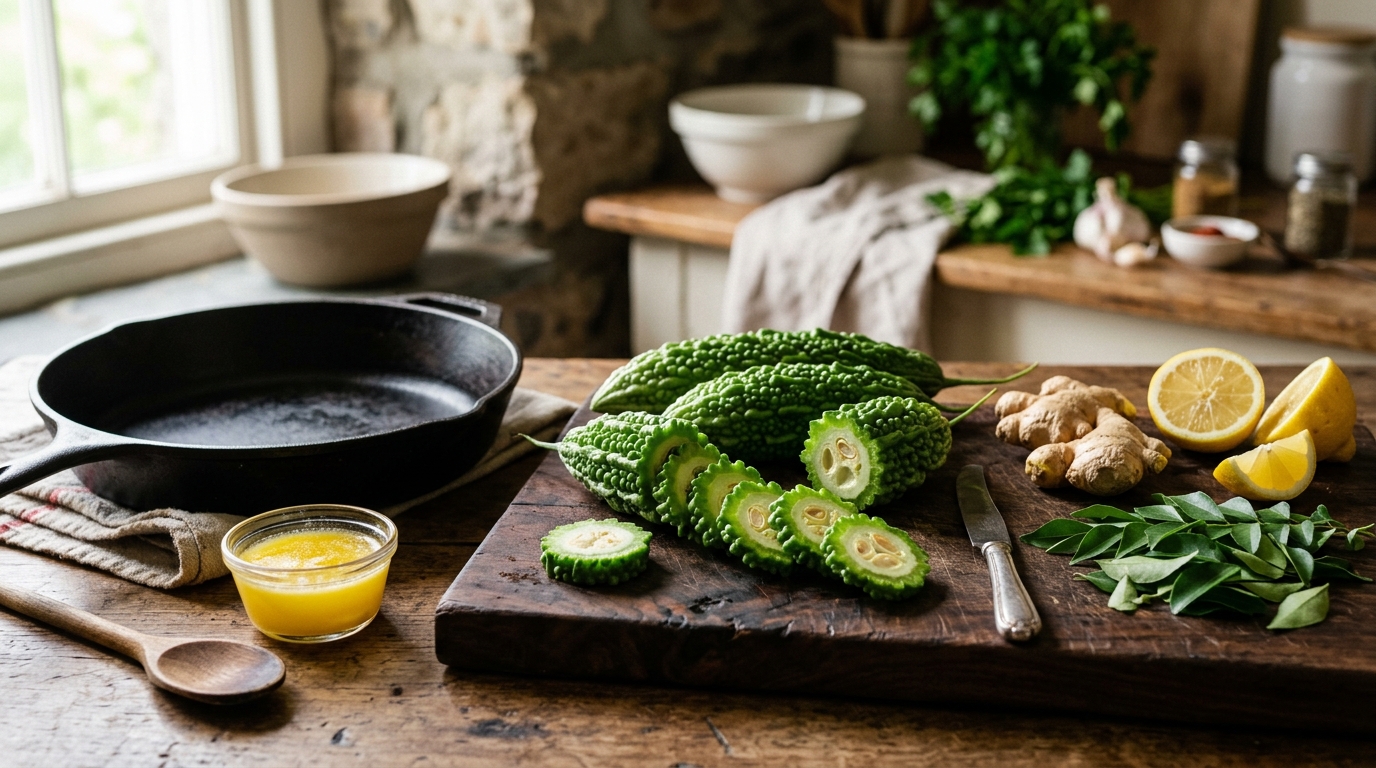
Instead of drinking unpalatable raw juices, focus on eating whole, gently cooked fibrous vegetables sautéed in healthy, heat-stable fats like Ultimate Organic Life Grass-Fed Ghee or cold-pressed extra virgin olive oil. Healthy fats stimulate bile secretion, aiding in digestion and liver detoxification.
Combining clean low-carb meals with intermittent fasting allows the liver to exhaust its glycogen stores and initiate hepatic autophagy, naturally clearing accumulated fat droplets from liver hepatocytes.
The Pharmacognosy of Bitter Melon: Active Phytochemicals vs. Toxicity Risks
Bitter melon (Momordica charantia), locally celebrated as korola or karela, contains a unique suite of potent botanical compounds that require rigorous scientific understanding:
- Charantin and Polypeptide-p: These are plant-derived steroidal saponins and insulin-mimetic peptides that demonstrate glucose-lowering properties in animal models by enhancing peripheral glucose uptake and stimulating hepatic glycogen synthesis.
- The Unfiltered Toxicants: Vicine and Momordicine: Concentrated raw juice contains vicine, a pyrimidine nucleoside that in susceptible individuals can induce acute oxidative stress in red blood cells. In individuals carrying the glucose-6-phosphate dehydrogenase (G6PD) deficiency trait, consuming high concentrations of raw bitter melon juice can trigger acute hemolytic anemia (favism). Furthermore, raw momordicine alkaloids severely irritate gastric and intestinal mucosal linings, frequently inducing nausea, severe abdominal colic, vomiting, and diarrhea.
- Hepatocellular Stress: Clinical toxicological reports document cases of acute, paradoxical transaminase elevations (spikes in SGPT and SGOT) in patients consuming unstandardized homemade raw extracts daily, reflecting acute toxic hepatitis rather than liver cleansing.
The Safe Culinary Medicine Blueprint: How to Eat Korola for Liver Health
At Health Revolution and within the JK Lifestyle framework, we firmly advise patients against drinking harsh raw vegetable juices. The biologically safe, therapeutic way to enjoy bitter melon is through gentle, traditional culinary preparation:
| Step | Culinary Technique | Biochemical Purpose |
|---|---|---|
| 1. De-Seeding & Slicing | Slice korola into 5mm rounds and scrape away the fibrous inner white pith and mature red/white seeds. | Removes the highest concentration of bitter cucurbitacins and indigestible lectins. |
| 2. Mineral Brining | Toss slices with 1/2 tsp Ultimate Organic Life Himalayan Pink Salt; let sit for 15 minutes, then gently squeeze out excess liquid. | Draws out harsh surface alkaloids while preserving valuable dietary fiber and micronutrients. |
| 3. Sautéing in Pure Ghee | Sauté over medium heat in 1 tablespoon of Ultimate Organic Life Grass-Fed Ghee with fresh ginger, turmeric, and cumin seeds until tender. | Thermal cooking deactivates heat-labile plant toxins. The healthy saturated fats in ghee stimulate bile acid secretion, aiding liver detoxification. |
Frequently Asked Questions
Is raw korola juice safe for fatty liver?
There is no universal safety assurance or established raw-juice prescription for fatty liver. Preparation, medicines and individual circumstances matter.
Can korola replace insulin or diabetes tablets?
No. The studies discussed here do not establish it as an equivalent replacement, and combining preparations with treatment may increase glucose-lowering effects.
Does charantin act as plant insulin?
The label is misleading. Charantin and insulin-like plant proteins are different substances, and neither description makes a homemade drink equivalent to prescribed insulin.
How much raw korola juice should I drink daily?
The cited extract and capsule studies cannot provide a validated daily juice dose for fatty liver. Do not convert a capsule amount into a homemade recipe.
Does a negative small trial prove korola has no effect?
No. It limits what can be concluded from that study; it does not establish the effectiveness or ineffectiveness of every possible preparation.
The Bottom Line
Judge the preparation, the evidence and the proposed change together. A familiar vegetable can remain part of a food conversation without being promoted into a substitute for liver assessment or diabetes treatment.
Health Revolution, part of JK Lifestyle, can help you connect these questions with your existing care through a lifestyle consultation.
Book Your Lifestyle Consultation — Call 09678-242404.