
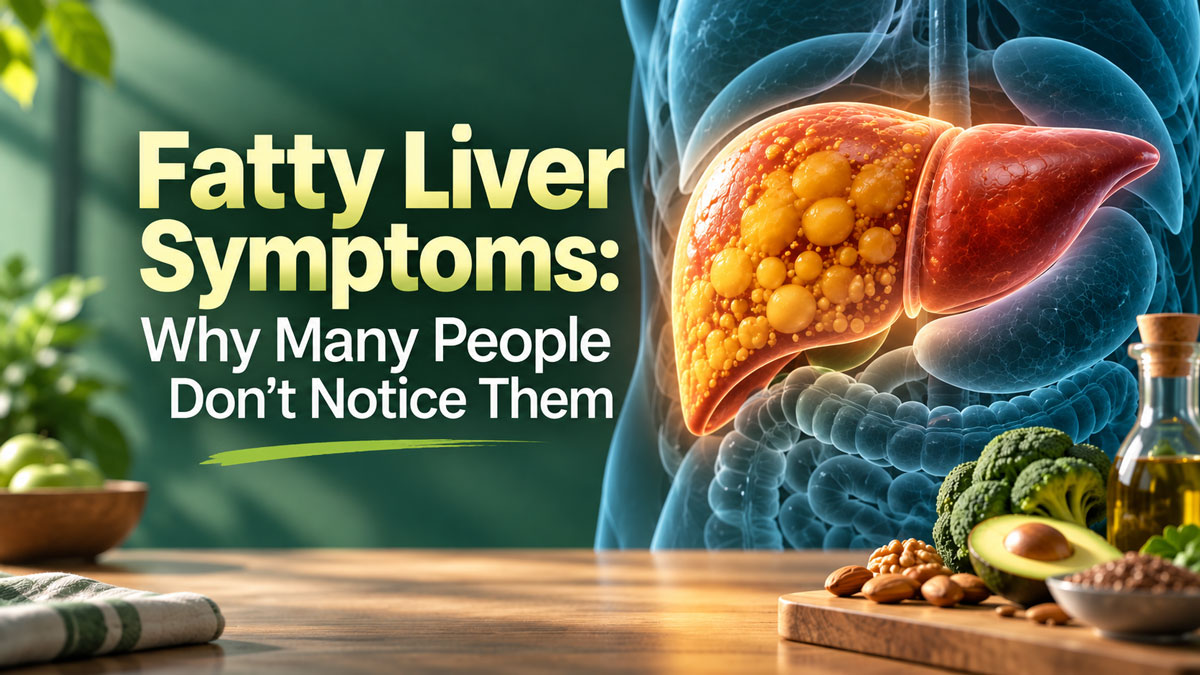
You want your liver to stay healthy. Of course you do. But how are you deciding whether it is healthy?
Because you have no pain? Because you can work all day? Because you do not look overweight?
Fatty liver symptoms are often absent. When symptoms occur, they may include tiredness, feeling generally unwell, or discomfort beneath the right ribs. These feelings alone cannot confirm the diagnosis. NHS guidance
So let us understand what deserves attention—and how you can begin taking care of your liver with confidence.
“I Feel Fine. Why Should I Be Concerned?”
Fatty liver means excess fat has accumulated in liver cells. The metabolic form is called metabolic dysfunction-associated steatotic liver disease, or MASLD.
This can happen quietly. You may continue eating, working, and meeting family without noticing a change.
Some people develop inflammation and scarring. In severe cases, this can lead to cirrhosis, liver failure, or the need for a transplant. That is a possible progression, not everyone’s future. NIDDK explanation
There is good reason for hope. Appropriate lifestyle changes can reduce liver fat and improve health. The useful response is to understand your condition and act before complications develop.
Which Fatty Liver Symptoms Deserve Attention?
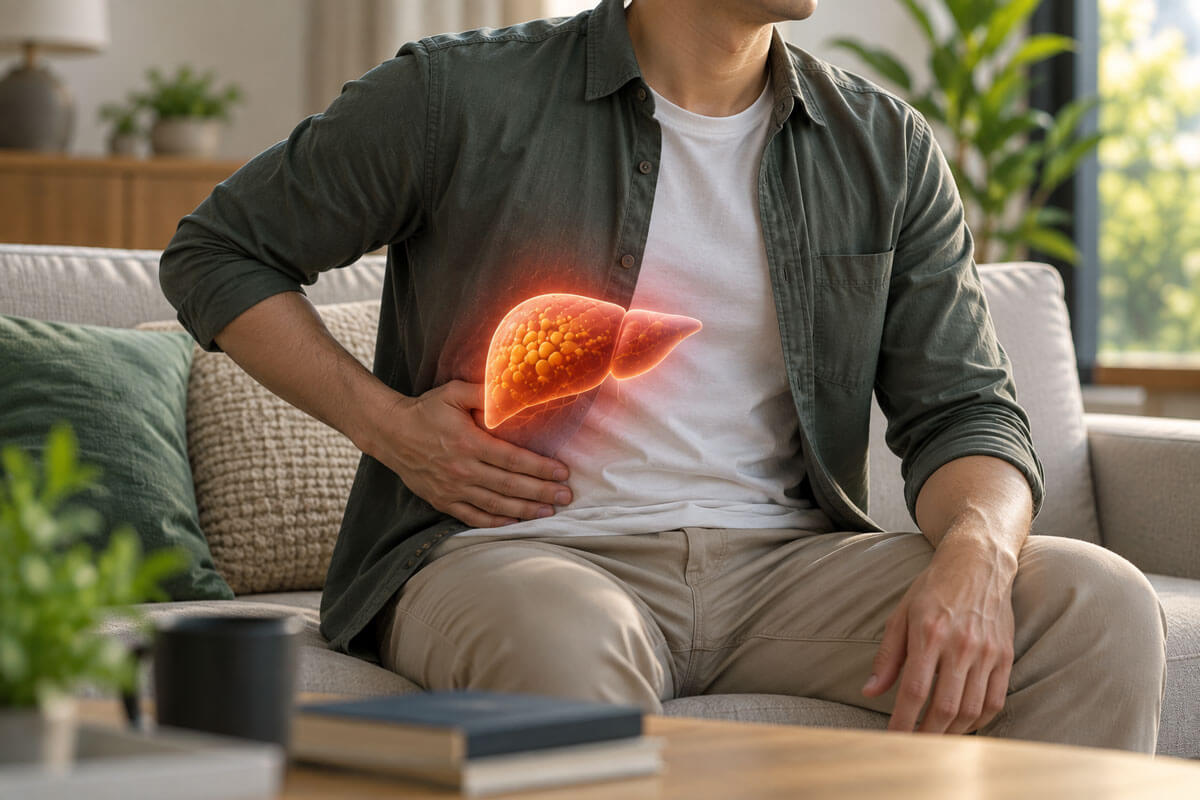
Perhaps you feel tired more often. Perhaps there is an uncomfortable heaviness on the right side of your abdomen.
You might also describe feeling unpleasant after meals or weak when meals are delayed. But pause before deciding that your liver explains everything.
These experiences can have different causes. Fatty liver symptoms are not specific enough to diagnose the condition yourself. Some people have no symptoms even when scarring is present. NIDDK symptom guidance
Tell your clinician what you notice, when it happens, and how long it has continued.
You do not have to find the explanation alone. Your observations help start the investigation.
Look Beyond Your Weight
You may think, “My waist has grown. Could my liver be affected?”
That is a reasonable question. Excess abdominal fat, type 2 diabetes, and abnormal cholesterol or triglycerides deserve attention.
But being slim does not rule out fatty liver. Your appearance cannot show how much fat is stored inside your liver.
Insulin resistance is an important part of the metabolic picture. It means your cells respond less effectively to insulin, the hormone that helps regulate blood glucose. Fatty liver and insulin resistance commonly occur together. NIDDK metabolic guidance
This connection helps explain why clinicians consider blood sugar, blood pressure, waist size, and blood fats together.
However, genetics, medicines, alcohol, and other conditions also matter. Understanding the causes should help you make decisions, without turning the diagnosis into personal blame.
What Does Your Everyday Routine Look Like?
Think about an ordinary week.
A large rice serving at lunch. Sweet tea between meetings. Biscuits beside the computer. A heavy meal at a family invitation. Hours sitting down, followed by another late night.
One occasion does not explain your health. Repeated habits are worth reviewing.
Eating more energy than your body needs and being physically inactive can contribute to the conditions associated with liver fat. NIDDK assessment guidance
Start noticing the pattern. What do you eat? How much? When do you move? When do you rest?
Write it down for a few days. You are gathering information that can help you change.
Find Out What Your Report Actually Means
Because fatty liver symptoms can be absent, assessment matters.
Assessment | What it helps explain |
Liver blood tests, including ALT/SGPT | Whether there are signs of liver injury requiring investigation. |
Ultrasound | Whether visible fat has accumulated in the liver. |
FIB-4 and, when appropriate, FibroScan | The likelihood of liver scarring and whether further assessment is needed. |
An ultrasound fat grade is not the same as a fibrosis stage. Your clinician interprets the findings together. NIDDK diagnosis guidance
HOMA-IR estimates insulin resistance, but it does not diagnose liver fat or scarring. It is not a compulsory test for everyone, and there is no single target suitable for every person.
Ask: “What do my results mean, and what should we check next?”
Give Your Meals a Clearer Direction
After hearing “fatty liver”, you may immediately remove egg yolks while keeping sweet drinks and oversized portions.
Look at the whole meal.
Reduce sugary drinks, sweets, and frequent heavily processed snacks. Give vegetables and suitable protein sources a proper place. Review rice and roti portions.
Whole fruit and unsweetened dairy do not automatically need to disappear. Fruit juice and sweetened drinks deserve particular attention. Choose appropriate portions and a plan suited to your health.
Fats need thoughtful choices too. Prefer unsaturated sources, while keeping ghee, butter, and fatty meat portions modest. NIDDK dietary guidance
You can begin with familiar foods and a better balance.
Bring Movement, Rest, and Mental Peace into the Plan
At JK Lifestyle, healthy eating sits alongside exercise, sleep, mental peace, and individually appropriate fasting.
Begin moving at a level you can manage. Build gradually. Physical activity can benefit fatty liver even without weight loss; when weight loss is appropriate, aim for gradual progress. NIDDK treatment guidance
Make room for a consistent bedtime and enough rest. A quiet walk, time outdoors, prayer, or reflection may help you build a calmer routine.
If fasting interests you, discuss your health and medicines first. Insulin and some diabetes medicines can cause low blood sugar when meals are skipped. Do not change treatment yourself.
Vitamin D also needs individual judgement. Ask whether testing or supplementation is appropriate; taking more is not automatically better. Excess supplementation can be harmful.
Know When to Seek Urgent Help
New yellowing of the eyes or skin, or new abdominal swelling, needs prompt medical assessment.
Vomiting blood, black tarry stools, or sudden confusion requires emergency care. These are not routine early fatty liver symptoms. NHS warning signs
Know When to Seek Urgent Help
New yellowing of the eyes or skin, or new abdominal swelling, needs prompt medical assessment.
Vomiting blood, black tarry stools, or sudden confusion requires emergency care. These are not routine early fatty liver symptoms. NHS warning signs
Questions You May Be Asking
Yes. Liver fat can decrease with appropriate care. Results depend on your condition, including any scarring. Follow-up helps assess progress.
We recommend booking an appointment to ensure shorter waiting times and proper scheduling with your preferred doctor. However, we also accept walk-ins for urgent cases. Our team will assist you as quickly and comfortably as possible.
Feeling better is encouraging, but symptoms cannot confirm recovery. Continue your agreed follow-up.
Give Yourself a
Starting Point Today
You do not need to wait for pain to take your health seriously.
Gather your reports. Review your routine. Choose a change you can repeat, and ask for guidance where you need it.
For help understanding your liver health and planning practical lifestyle changes, speak with the JK Lifestyle team.
