
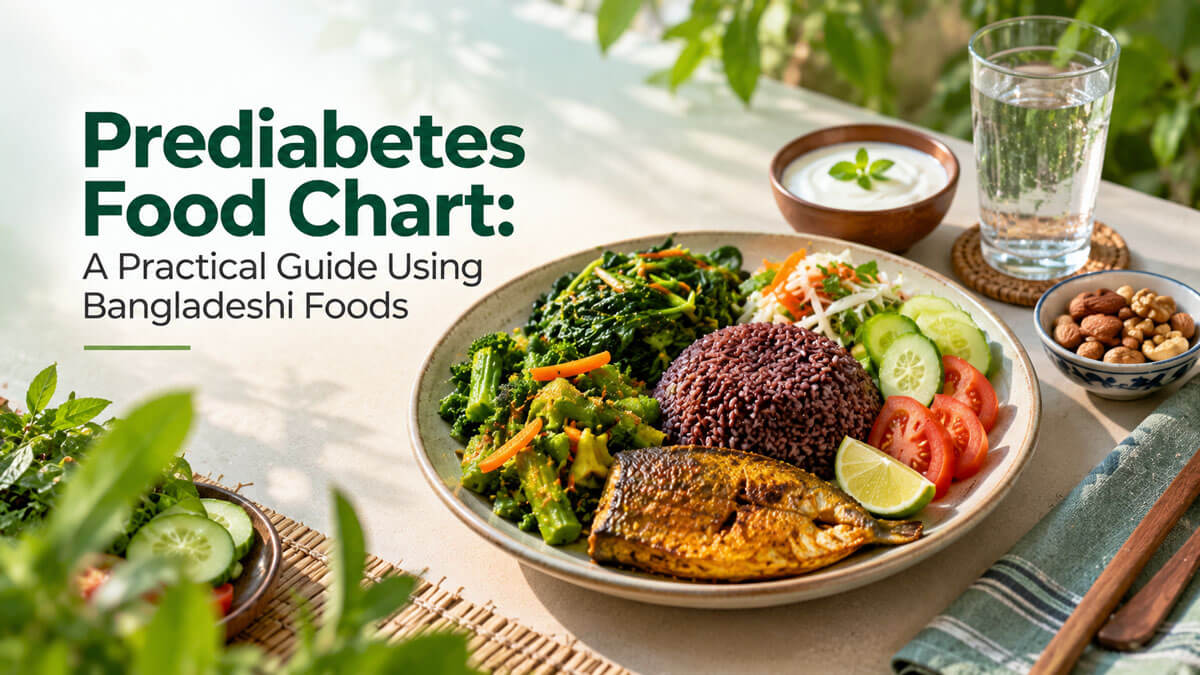
After a prediabetes diagnosis, even a familiar meal can leave you uncertain. Should you stop eating rice? Is fruit still safe? What will keep you full without sending your blood sugar too high?
You deserve clear answers—and meals you can enjoy.
Prediabetes means your blood sugar is higher than normal, but below the diabetes range. Progression to type 2 diabetes is not inevitable. Changes to food and daily habits can help reduce your risk. NIDDK guidance
This prediabetes food chart gives you somewhere practical to begin, using foods familiar to Bangladeshi households.
Why Your Body’s Response to Insulin Matters
Insulin helps glucose move from your blood into cells for energy. With insulin resistance, cells respond less effectively. Your pancreas may compensate by producing more insulin. When it cannot keep up, blood sugar rises.
Insulin resistance is linked with prediabetes, type 2 diabetes, and metabolic fatty liver disease. It also occurs alongside factors that increase heart disease risk. These conditions have several causes; insulin resistance is one important part of the picture. NIDDK explanation
An insulin rise after eating is normal. The aim is to support healthier blood-sugar levels and improve insulin sensitivity over time.
Start by reducing sugary drinks and oversized portions of refined carbohydrates. Build meals around vegetables, protein, and measured amounts of fibre-rich carbohydrate foods. ADA carbohydrate guidance
Your Prediabetes Food Chart
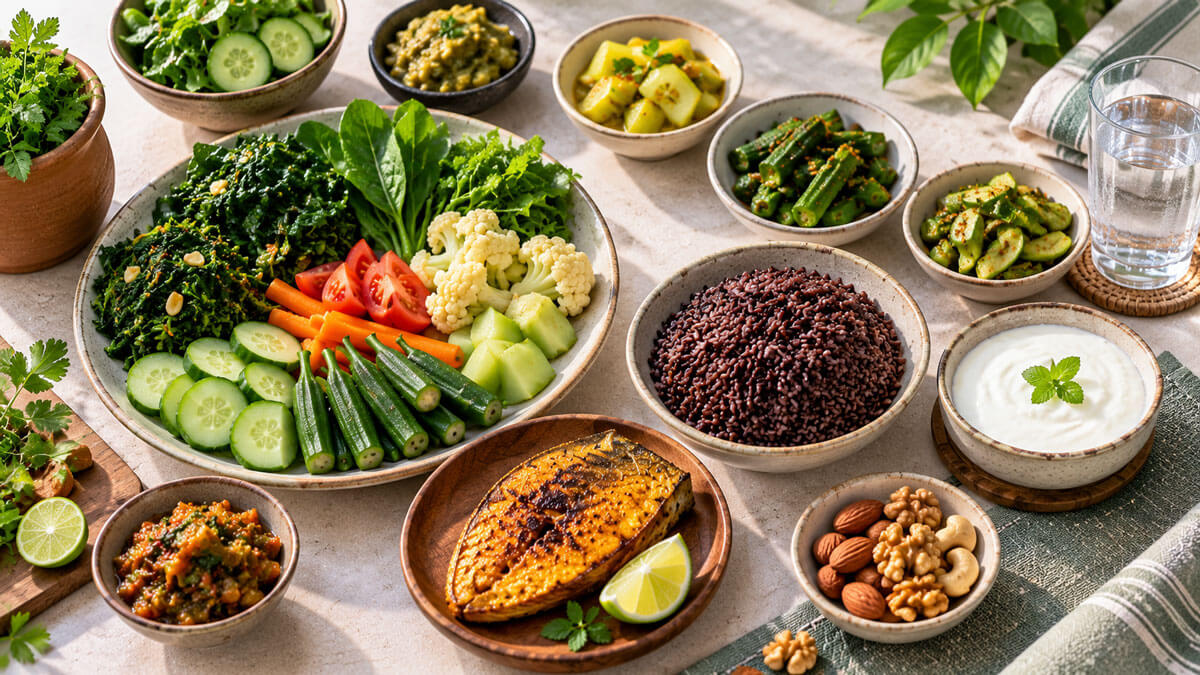
If you are wondering what to eat with prediabetes, use this chart to plan your next meal.
These are starting examples, not a personalised prescription. One cup means a 240 ml measuring cup. Grain and dal portions refer to cooked food.
Food group | Familiar choices | How to include them |
Non-starchy vegetables | Lau, potol, bhindi, cauliflower, leafy greens | Make these roughly half your lunch or dinner plate. Use measured cooking oil. |
Protein | Fish, eggs, skinless deshi chicken, deshi beef, deshi mutton | Include with main meals. A palm-sized piece of fish or chicken is a useful visual guide. |
Grains | Whole-grain black rice, quinoa, buckwheat, buckwheat atta roti | Keep portions measured. Half a cup of cooked grain is an example to personalise, not a universal limit. |
Dairy | Plain yoghurt, | Choose unsweetened varieties and account for their carbohydrates. |
Fats and nuts | Peanuts, other nuts, saturated oils like olive oil, coconut extra virgin oil, deshi ghee | Use a small handful of nuts and modest amounts of oil. |
Drinks | Water, unsweetened green tea, ginger water, chia seeds water, apple cider vinegar, coconut vinegar | Make water your usual drink. Limit sweets and sugary drinks; honey and jaggery also contribute sugar. |
These choices follow the principles of vegetables, lean protein, quality carbohydrates, and less added sugar. ADA nutrition guidance
Can Rice Still Be Part of Your Meals?
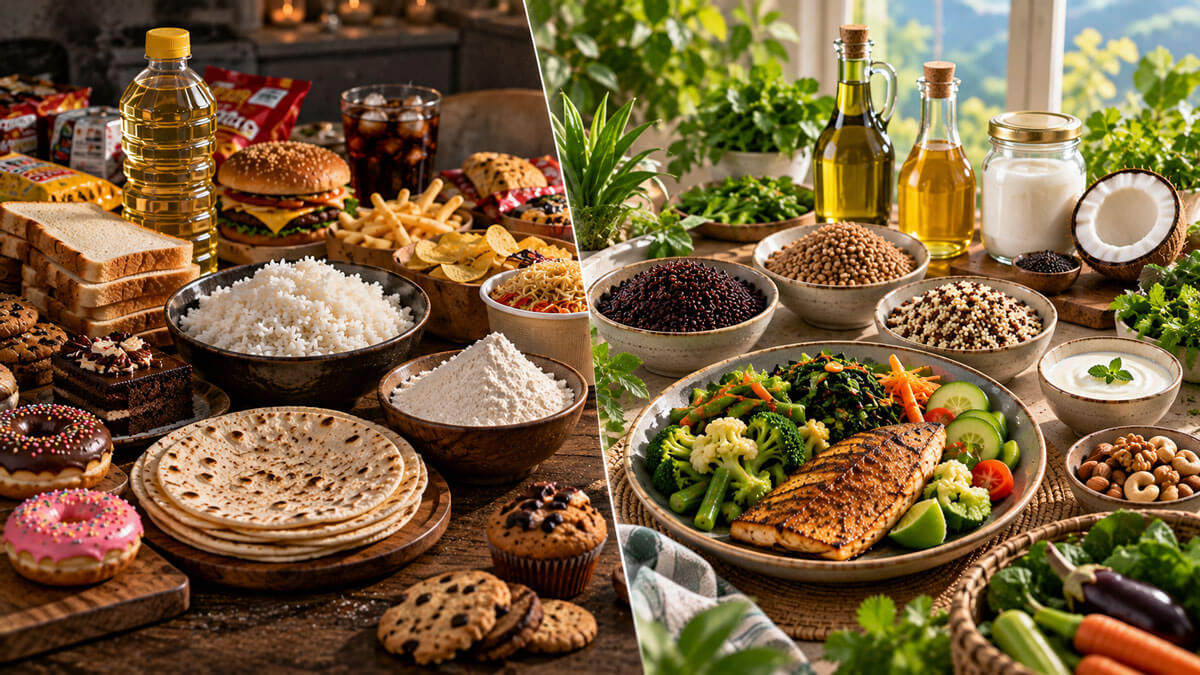
Yes, rice can fit into a prediabetes meal plan. Choosing the type thoughtfully is useful. Choosing the portion matters too.
Whole-grain black rice, quinoa, and buckwheat offer alternatives to polished white rice. These are among the options promoted by Ultimate Organic Life. Their fibre can help make meals more satisfying.
If these options stretch your budget, consider unpolished brown rice. It retains the bran and germ removed during white-rice processing, providing more fibre. White rice still supplies energy, but contains less fibre. Harvard’s Nutrition Source
However, “complex carbohydrate” does not automatically mean a food has little effect on blood sugar. White rice contains complex starch too. Processing, cooking, portion size, and the rest of the meal all influence your response.
Black rice, quinoa, and buckwheat still contain carbohydrates. They cannot guarantee a small insulin response or prevent insulin resistance on their own.
For a practical starting point, use a plate about 23 cm across. Fill half with non-starchy vegetables, one quarter with protein, and one quarter with carbohydrate foods. Include dal or potatoes within your carbohydrate planning. CDC plate guidance
Serve the vegetables and fish first. Then add your grain. The balance becomes easier to see.
A Sample Prediabetes Meal Plan with Bangladeshi Foods
Here is how those choices could come together. Adjust the amounts to your needs; this is not a complete calorie prescription.
Meal | Example to Adapt for the First Week |
Breakfast | A small buckwheat atta roti, eggs, and cooked vegetables, with unsweetened green tea. |
Lunch | Black rice, fish, chicken, or beef, along with a generous serving of vegetables. Adjust the grain portion according to your needs. |
Optional Snack | Plain yogurt or a small handful of peanuts. |
Dinner | Quinoa or buckwheat, served with chicken, eggs, mutton, pulses, and vegetables. |
Meal | An Example to Adapt for the 2nd Week Fat Adaptation |
Breakfast | Chia seeds with water, eggs, cooked vegetables, and unsweetened green tea. |
Lunch | No farmed fish; choose sea fish or naturally sourced river fish, deshi chicken, deshi beef, and an unlimited serving of vegetables. Adjust the grain portion according to your needs. |
Optional Snack | Peanuts and detox water anytime. |
Dinner | Deshi chicken, eggs, mutton, or pulses with vegetables. |
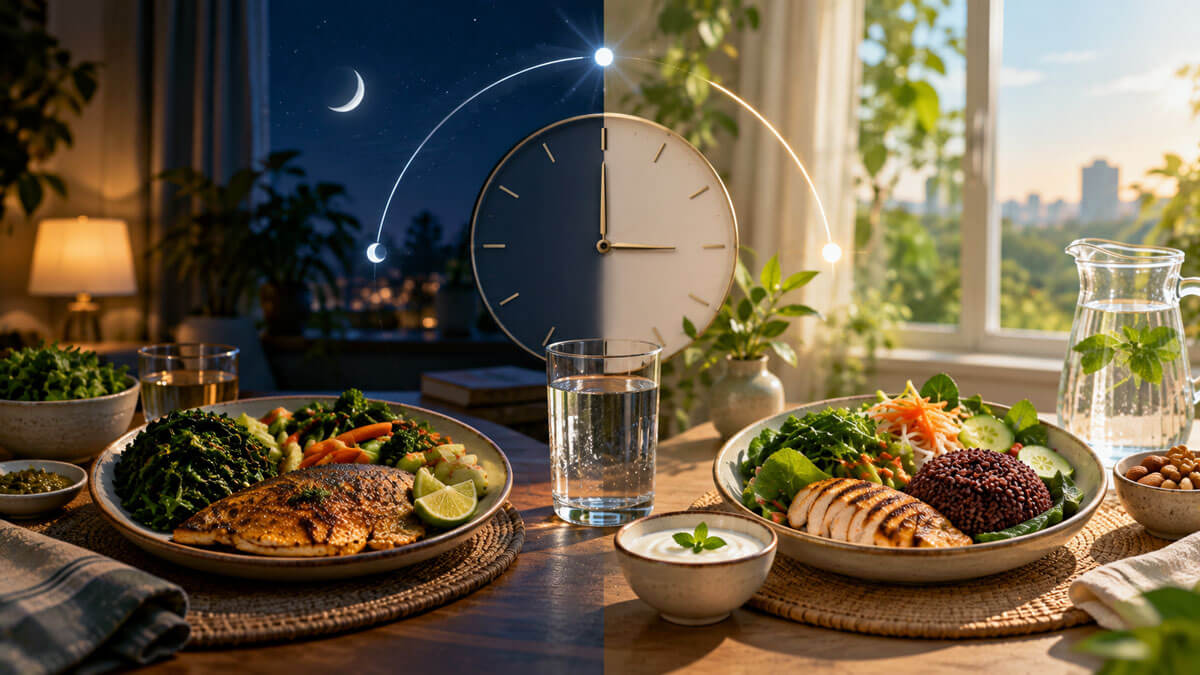
Meal | An Example to Adapt for the 3rd Week of Intermittent Fasting |
Fasting Window | Gradually practice different fasting patterns: 16:8, 18:6, and 20:4. Include one-meal-a-day (OMAD) once a week if suitable. |
First Meal (Lunch – Breaking Fast) | A high-protein, low-carbohydrate meal: eggs, fish, deshi chicken, beef, or mutton with plenty of vegetables and healthy fats. Avoid refined carbohydrates. |
Last Meal (Evening – 6:00 PM) | A protein-focused dinner with fish, chicken, eggs, mutton, or pulses, along with vegetables. Keep carbohydrates low to support fasting adaptation. |
During Fasting Window | Drink enough water. Unsweetened green tea or black coffee can be included if preferred. |
Choose foods your household can prepare regularly. Seasonal vegetables, eggs, and deserve a place alongside any premium grain.
If you remain hungry, ask for portion adjustments. Eating well should provide enough nourishment for your day.
Give Your Meals Support from the Rest of Your Day
JK Lifestyle’s five pillars bring together healthy food, fasting, exercise, sleep, and mental peace.
Put that wider approach into practice gradually. Make room for regular movement, a consistent bedtime, and time to unwind. Choose one food change you can repeat tomorrow.
Fasting needs individual consideration. It is not compulsory for managing prediabetes, and suitability depends on your health and medicines. Seek guidance before starting, especially during pregnancy or when taking medicines that can cause low blood sugar. Cleveland Clinic fasting guidance
Questions You May Still Have
We know that fruit contains Fructose. And fructose is a different simple sugar from glucose. That’s why we don’t recommend consuming sweetened fruits drinks and juices, as they are a concern for fatty liver. Choose measured portions of whole fruit rather than juice or oversized fruit bowls. NIDDK liver nutrition guidance
Yes. Lifestyle changes can help, although results vary. Follow-up blood tests show whether your plan is working. Continue prescribed treatment unless your clinician changes it. NIDDK guidance
Contact Us
Start with the Meal in Front of You
You do not need to solve every food question today. Start with your next plate. Add vegetables, include protein, and measure your chosen carbohydrate.
Then build on what feels manageable.
For help adapting this prediabetes food chart to your reports, routine, and preferences, speak with the Health Revolution team.
