
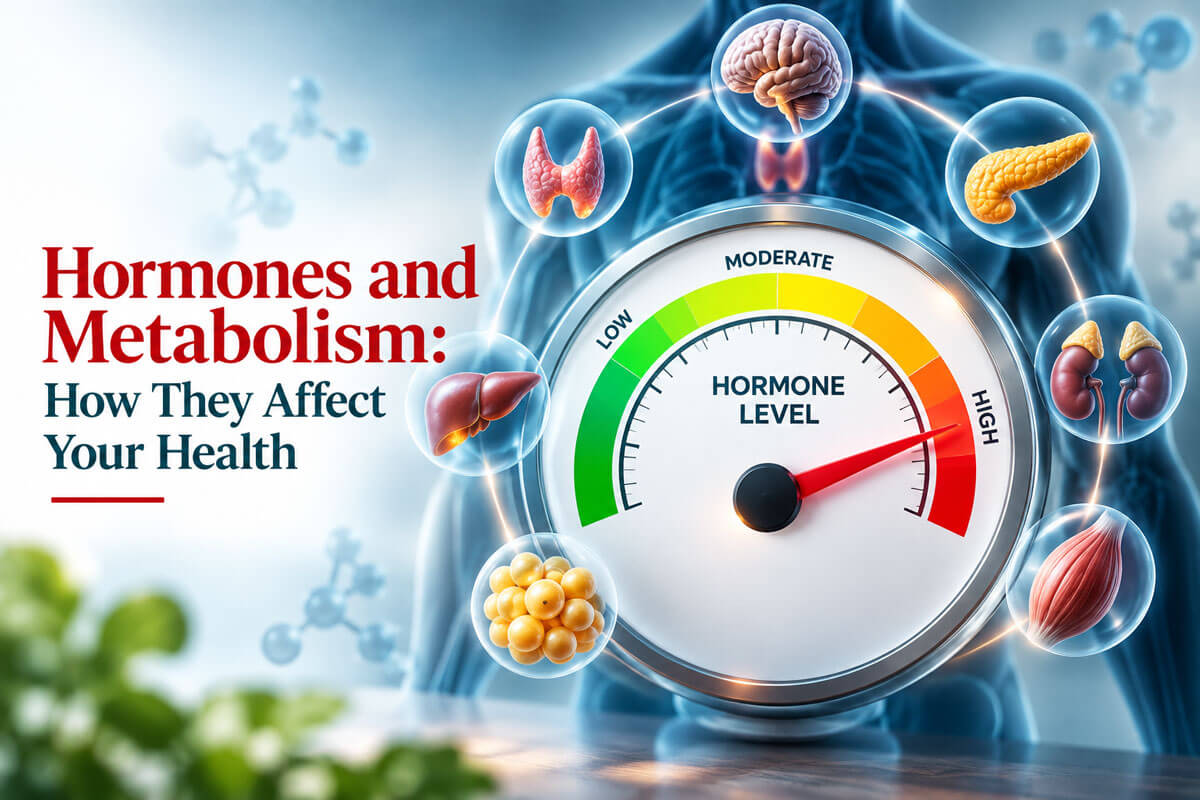
You want enough energy for your work, your family and yourself. Yet lately, you feel tired more often. Your appetite seems different. Your clothes fit differently too.
Could hormones and metabolism be involved? And where should you begin?
Hormones help regulate how your body uses energy, manages blood sugar and responds to hunger. Understanding hormone health can help you make sense of these connections, although symptoms alone cannot identify their cause.
You deserve an explanation you can understand—and practical steps you can follow.
What Is the Connection Between Hormones and Metabolism?
Metabolism includes the chemical processes that keep you alive: using nutrients, producing energy, building tissues and maintaining essential functions.
It continues while you sleep, sit or walk.
Hormones are chemical messengers that help coordinate these processes. Imagine finishing lunch. As nutrients become available, hormonal signals help your body decide how to use and store them.
These messages depend on both the amount of hormone available and how the receiving tissues respond. Hormone health therefore involves more than getting a single blood-test number into range.
Which Hormones Help Regulate Your Metabolism?
Several hormones work together. These are useful starting points:
Hormone | Its role in simple language |
Insulin | Helps regulate blood glucose and supports energy use and storage. |
Glucagon | Helps the liver release glucose when needed, including between meals. |
Thyroid hormones | Help regulate how quickly the body uses energy. |
Cortisol | Helps the body respond to stress and manage available fuel. |
Leptin and ghrelin | Contribute to signals about energy stores and hunger. |
These are essential messengers. Insulin and cortisol both perform necessary jobs; the aim is appropriate function.
How Can Hormones Affect Your Everyday Health?
Your Energy
An underactive thyroid can cause tiredness, feeling unusually cold and weight gain. However, tiredness also has other explanations. Your symptoms, history and appropriate tests help distinguish them.
Your Appetite
Hunger involves signals between your digestive system, fat tissue and brain. Ghrelin helps stimulate appetite, while leptin communicates information about energy stores.
These signals operate alongside your surroundings, habits and sleep. Feeling hungry is useful information to discuss, rather than a reason to blame yourself.
Your Weight and Blood Sugar
With insulin resistance, tissues respond less effectively to insulin. The pancreas may produce more to compensate, sometimes keeping blood glucose normal initially.
Weight and metabolic health also reflect food intake, activity, genetics, medicines and other influences. One hormone cannot explain everyone’s experience.
Do These Changes Mean You Have a Hormonal Problem?
Persistent symptoms deserve assessment, but they do not establish a hormonal diagnosis.
For example, fatigue and unexplained weight changes can occur with thyroid disease, yet overlap with other conditions. Unusual heat or cold sensitivity and changes in menstrual patterns may also deserve discussion.
Write down when the changes began. Have they continued for weeks? Are they affecting your work or sleep? Have your medicines changed?
Those details help turn a vague worry about hormone health into a useful consultation.
How Can Daily Habits Support Hormone Health?

At JK Lifestyle, we consider healthy eating, exercise, sufficient sleep, mental peace and individually suitable fasting together.
Begin With Nourishing Meals
Look at your usual lunch. Could vegetables and protein have a more consistent place?
Try fish, eggs, chicken or pulses alongside lau, bhindi and leafy greens. Whole-grain black rice, brown rice, quinoa or buckwheat can provide carbohydrate variety. Review portions, cooking fats and sweetened drinks too.
Further carbohydrate reduction may suit some people, but it needs individual planning. The aim is adequate nourishment and an eating pattern you can maintain. Healthy eating and activity can help improve insulin resistance.
Make Movement Manageable
Start with activity that fits your ability: a regular walk, fewer uninterrupted hours sitting, or suitable strength exercises.
Physical activity supports blood glucose management. Choose a routine you can repeat alongside your responsibilities.
Give Sleep a Proper Place
Perhaps you carefully plan lunch but regularly postpone bedtime.
In a randomised trial of 80 adults with overweight who usually slept less than 6.5 hours, a sleep-extension programme reduced energy intake compared with continuing usual sleep habits.
The intervention lasted two weeks. It supports paying attention to sleep, without proving that sleep alone corrects hormonal disorders or guarantees lasting weight loss.
Make Space for Mental Peace
What helps you unwind—prayer, quiet time, conversation or a short break outside?
Build room for it. You do not need to measure cortisol to give yourself permission to rest.
Consider Fasting Individually
Fasting is optional. Discuss your health, medicines and nutritional needs before substantially changing meal timing.
If you use insulin or certain diabetes tablets, skipping meals can cause low blood sugar. Arrange guidance rather than changing medication yourself.
When Should You Consider Tests or Medical Advice?

Begin with your concerns and medical history. There is no single test that measures overall hormone health.
A clinician may request thyroid tests when indicated, or glucose testing when symptoms and risk factors warrant it. Testing should answer a specific question.
Lifestyle support also works alongside necessary treatment. For example, an underactive thyroid commonly requires thyroid hormone replacement; dietary changes do not replace it.
How JK Lifestyle Can Help
Bring your reports, medicine list and a description of your usual day.
At JK Lifestyle, we can help you review meals and daily habits, identify manageable changes and arrange follow-up. Explain what feels difficult too—cost, cooking, work hours or uncertainty about what to eat.
Your plan should reflect those realities, with specialist assessment when needed.
Start by Understanding What Has Changed
You do not have to explain every symptom before asking for help.
Write down what you have noticed and bring your questions to a consultation. Understanding your situation gives you a clearer place to begin.

Five Questions About Hormone Health
No. Weight has several influences. Persistent difficulties deserve a broader assessment.
Healthy habits support overall health. Continue prescribed treatment and discuss adjustments with your clinician.
Yes. Hormones regulate metabolism and many other functions in both men and women.
Not automatically. Assessment should guide which tests are useful.
No single product can reliably do that. Treatment depends on whether a specific problem exists and what causes it.