
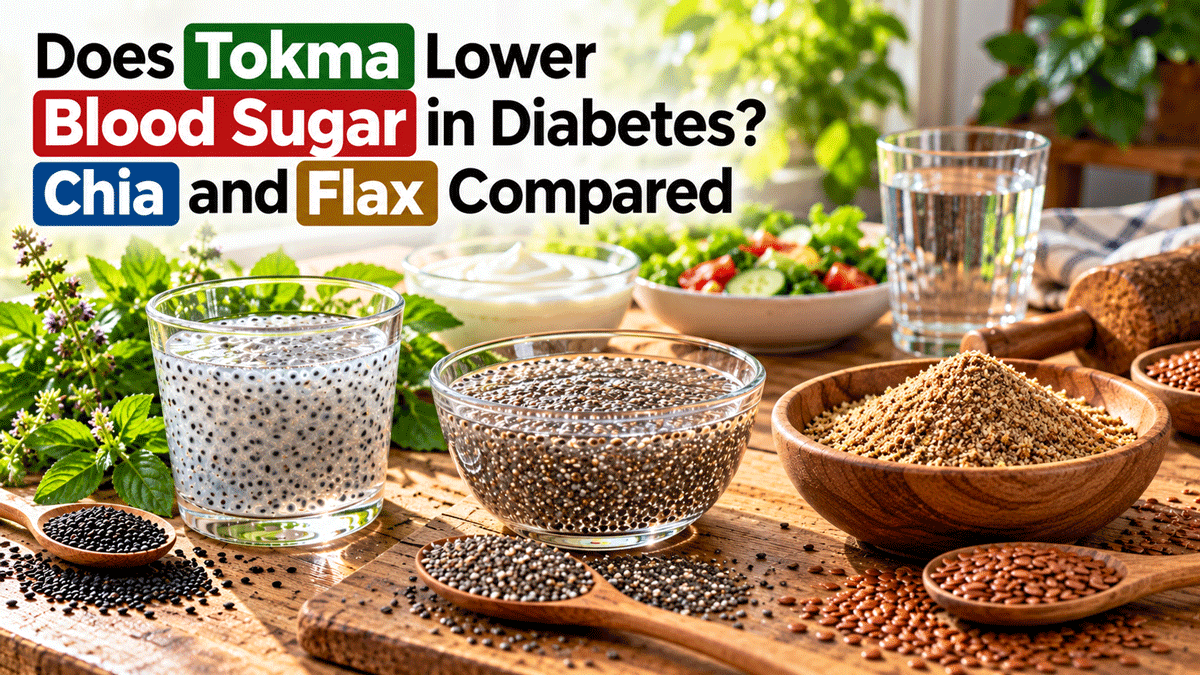
When asking does tokma lower blood sugar in diabetes, the clinical reality is that edible basil seeds (tokma), chia, and flax provide supportive soluble mucilage fiber rather than an independent diabetes cure. Edible basil seeds, chia and flax can contribute useful food properties, but early research, fibre content and a gel forming in water do not establish a therapeutic dose or justify replacing medicine.
The useful question is what a particular seed adds to a particular meal. That includes its preparation, the amount you actually eat, the rest of the recipe and whether you enjoy it enough to keep using it.
Health Revolution’s approach puts the ingredient back into that wider picture. A familiar food can be worthwhile without carrying the impossible responsibility of controlling diabetes by itself.
Does Tokma (Basil Seeds) Help Lower Blood Sugar in Diabetes?
Yes, tokma (basil seeds), along with chia and flax seeds, can modestly blunt post-meal blood sugar spikes due to their high soluble mucilage fiber, which slows carbohydrate digestion and gastric emptying. However, seeds are a supportive dietary tool—not a standalone cure or replacement for comprehensive diabetes management.
- Soluble Mucilage Fiber: The gelatinous coating formed when tokma soaks in water forms a barrier in the intestines, slowing glucose absorption.
- Chia vs. Tokma vs. Flax: Chia provides superior omega-3 ALA fats; flax offers powerful lignans; tokma provides cooling prebiotic fiber.
- Preparation Rule: Always soak tokma and chia seeds completely in water for at least 15–20 minutes before consumption to prevent swallowing or digestive discomfort.
1. Are tokma, chia and flax the same kind of seed?
They are different plants, and their names should not be treated as interchangeable. Chia is Salvia hispanica, flax or linseed is Linum usitatissimum, and food sold as tokma commonly refers to edible basil seeds.
The basil-seed food-science review examines Ocimum basilicum, or sweet basil. Its seeds have a water-attracting outer material called mucilage, which helps explain their use as thickeners and ingredients in drinks.
A common name is less precise than the plant and product information on the packet. Check that you are buying seeds intended for food, identify the species where listed, and distinguish the seed from an oil, leaf powder or concentrated extract.
This matters when reading a study. Research on a basil-leaf extract does not automatically describe an ordinary serving of edible basil seeds, just as a result involving isolated flax compounds does not establish what flax oil will do.
Think of the label as the beginning of the comparison rather than an administrative detail. If one product is a whole food and another is a capsule containing an extract, a shared plant name has not made their contents equivalent.
2. What can fibre and gel formation actually do?
Fibre can change digestion and contribute to fullness, but it does not cancel the other ingredients in a meal. The CDC’s explanation of fibre and diabetes distinguishes soluble fibre, which forms a gel and slows digestion, from insoluble fibre, which supports movement through the digestive tract.
That mechanism provides a reason to value fibre-containing foods. It does not mean every seed drink produces the same glucose response, because the amount, preparation and whole meal differ.
Harvard Health’s chia overview describes fibre, protein and plant omega-3 fats among chia’s nutritional features. It also discusses fullness and useful culinary forms, including puddings and additions to ordinary meals.
Fullness is an experience, while a blood-glucose result is a measurement. Feeling satisfied after breakfast is useful information, but it does not tell you your HbA1c or prove that medication is no longer needed.
For a hypothetical comparison, a plain seed-and-yoghurt mixture and a large syrup-sweetened dessert may both contain visible gel-coated seeds. Their similar appearance does not make the recipes nutritionally identical.
Our dietary fibre and blood sugar guide gives broader context. Look at the food around the seeds instead of treating the seeds as a protective coating for everything else.
3. How do realistic quantities compare?
Compare the same dry weight before judging which packet provides more fibre. A tablespoon of one ingredient may weigh differently from a tablespoon of another, especially when whole and ground forms are involved.
The Harvard Nutrition Source chia guide lists approximately 140 calories and 11 grams of fibre per 28 grams. Mayo Clinic’s ground-flaxseed guidance lists 37 calories and 2 grams of fibre per 7 grams.
The table rescales those published figures to fourteen grams for comparison. It is arithmetic using approximate reference values, not a recommended dose or a claim that every brand matches exactly.
| Food measured before adding water | Comparison weight | Approximate energy | Approximate fibre |
|---|---|---|---|
| Chia seeds | 14 g | 70 calories | 5.5 g |
| Ground flaxseed | 14 g | 74 calories | 4 g |
| Tokma | Check the edible product’s label | Product-specific | Product-specific |
Tokma composition varies across the materials studied in the basil review, so inventing one precise value would create false certainty. Use the actual packet when estimating its contribution to your meals.
Adding water increases the prepared mixture’s weight without multiplying the original seeds’ nutrients. If a hypothetical fourteen-gram portion becomes a much heavier bowl of gel, it is still the original amount of seed plus water.
That is why comparing dry seeds with the same weight of soaked seeds gives a misleading result. Specify whether the number describes the dry ingredient or the finished dish.
4. What do trials of chia seeds for diabetes show?
Human trials do not justify promising that chia will reliably lower HbA1c. In a twelve-week randomised trial of 42 adults with type 2 diabetes, participants received forty grams of chia daily or no supplement while continuing their usual care.
The chia group had lower systolic blood pressure relative to the control group, but there were no significant differences in the other measured outcomes, including glucose-control markers. A result for blood pressure is not automatically a result for glucose.
The research dose describes that experiment; it is not a daily instruction for everyone considering chia seeds for diabetes. Differences in participants, comparison foods, duration and outcomes can affect what another study finds.
It is also possible to find an ingredient useful without expecting a measurable laboratory effect. Enjoying its texture in breakfast is a different reason for choosing it from claiming it treats a disease.
When reading a headline, identify the outcome before the conclusion. “Helped one cardiovascular measure” and “replaced diabetes treatment” are not equivalent statements, even when both appear beside a photograph of the same food.
5. What does research on flaxseed for insulin tell us?
The findings are mixed, and the preparation matters. A 2013 crossover trial studied twenty-five people with prediabetes using zero, thirteen or twenty-six grams of ground flaxseed during twelve-week periods.
The thirteen-gram period improved several fasting glucose and insulin-related measures compared with the comparison periods. The larger amount did not show the same pattern, which challenges the assumption that doubling the portion necessarily doubles a benefit.
A separate trial involving 99 people with prediabetes compared twenty or forty grams of flaxseed powder daily with a control over twelve weeks. It found no significant between-group improvement in glucose or insulin-resistance measures.
This is why flaxseed for insulin should be understood as a research question rather than a treatment label. These studies do not identify a reliable household prescription, and findings in prediabetes do not automatically apply to every form or stage of diabetes.
Pay attention to the comparison as well as the change over time. If glucose improves in both the seed group and the control group, the improvement alone does not establish that the seed caused it.
That reasoning is useful far beyond flax: a treatment claim needs an appropriate comparison, not merely a lower number after something new was added.
6. Does tokma lower blood sugar in diabetes according to human research?
Some preliminary human research exists, but it does not establish dependable treatment effects from an ordinary tokma drink. A 2022 basil-seed supplementation report described forty-five days of raw, roasted or steamed seed preparations in people with diabetes and abnormal blood lipids.
The authors reported improvements and differences between preparations. However, the accessible abstract does not provide enough information about an untreated comparison, random allocation or a clearly transferable daily seed amount to turn that report into a home treatment protocol.
Randomly selecting participants is not the same as randomly assigning them to treatments. Nor does a reported improvement before and after an intervention establish how much came from the seeds rather than other changes during the same period.
The report’s reference to a twenty-percent preparation also should not be converted into “twenty grams daily.” A percentage needs a denominator and a description of what was prepared before it becomes an interpretable quantity.
These limitations support a proportionate conclusion: edible basil seeds are worth studying, but the available findings do not establish a dependable diabetes treatment or permission to reduce medicines.
7. What is a practical way to prepare tokma?
If you are deciding how to take tokma daily, choose an edible product, follow its preparation directions and fit it into an ordinary meal. There is no evidence-based therapeutic daily tokma dose established by the research discussed here.
For a soaking preparation, use clean water and the packet’s specified quantity and waiting time, allowing the gel coating to form before adding it to the chosen dish. Do not borrow a research extract dose or another seed’s recipe and assume it applies unchanged.
For chia, the Harvard Nutrition Source gives a culinary gel example of one-quarter cup of seeds mixed with one cup of liquid and left for approximately fifteen to twenty minutes. This makes a prepared batch; it is not an instruction to consume the whole quantity as a single diabetes serving.
Its guidance also cautions against swallowing dry chia by itself because it can expand and cause blockage, particularly with swallowing difficulty. Use an appropriate hydrated or moist preparation, and seek individual guidance when swallowing is already a problem.
Ground flax differs: Mayo Clinic notes that whole flax may pass through undigested, while grinding makes its contents more accessible. Choose a food product and preparation suited to the recipe, rather than assuming all three seeds require identical handling.
A practical meal choice might be prepared chia in plain yoghurt, suitable ground flax in porridge, or correctly prepared tokma added to an unsweetened drink. These are food-use examples, without a promised glucose response.
8. How can you compare recipes without fooling yourself?
Write down the complete recipe and the number of portions it makes. That reveals whether the seeds are replacing another ingredient, adding to the existing meal or accompanying a substantial amount of sugar.
Consider a hypothetical drink containing four teaspoons of added sugar in one glass. Adding soaked seeds does not remove those four teaspoons; dividing the same mixture equally between two glasses changes the amount per serving to two teaspoons.
This simple arithmetic often answers the practical question more clearly than calling the drink natural. The seed, milk, syrup, fruit and portion size all belong in the description.
Change one identifiable feature when comparing recipes, such as choosing an unsweetened base rather than adding several new ingredients at once. You can then judge preparation effort, taste and tolerance without pretending the comparison is a controlled medical experiment.
Our protein and meal-planning article offers useful context for the rest of the meal. A spoonful of seeds does not have to replace every other protein or fibre-containing food.
9. What precautions matter with larger amounts and supplements?
Food tolerance and supplement safety deserve separate attention. The NCCIH flaxseed guidance warns that higher amounts can cause bloating, fullness or diarrhoea and advises against eating raw or unripe flaxseeds.
Follow the edible product’s instructions rather than collecting unprocessed seeds or interpreting “natural” as ready to eat. Concentrated oils, mucilage products and extracts also differ from ordinary seed preparations.
NCCIH notes potential medicine interactions, including theoretical concerns with anticoagulants and antiplatelet medicines. Pregnancy and breastfeeding require particular caution because safety information is limited or uncertain.
Increasing the amount after discomfort is not a sensible test of commitment. Identify the product and quantity that caused symptoms, stop escalating it, and get advice when symptoms persist or the proposed use involves a concentrated supplement.
Continue the diabetes monitoring and treatment already agreed with your care team. None of the research here establishes that a seed preparation can take over a medicine’s job.
Incorporating Healthy Seeds the JK Lifestyle Way
Within the JK Lifestyle nutrition protocol, functional seeds like soaked tokma, organic chia seeds, and freshly crushed flaxseeds are valuable allies for gut health and insulin stabilization. Their prebiotic soluble fibers nourish beneficial gut microbiota, producing short-chain fatty acids (SCFAs) that enhance insulin sensitivity.
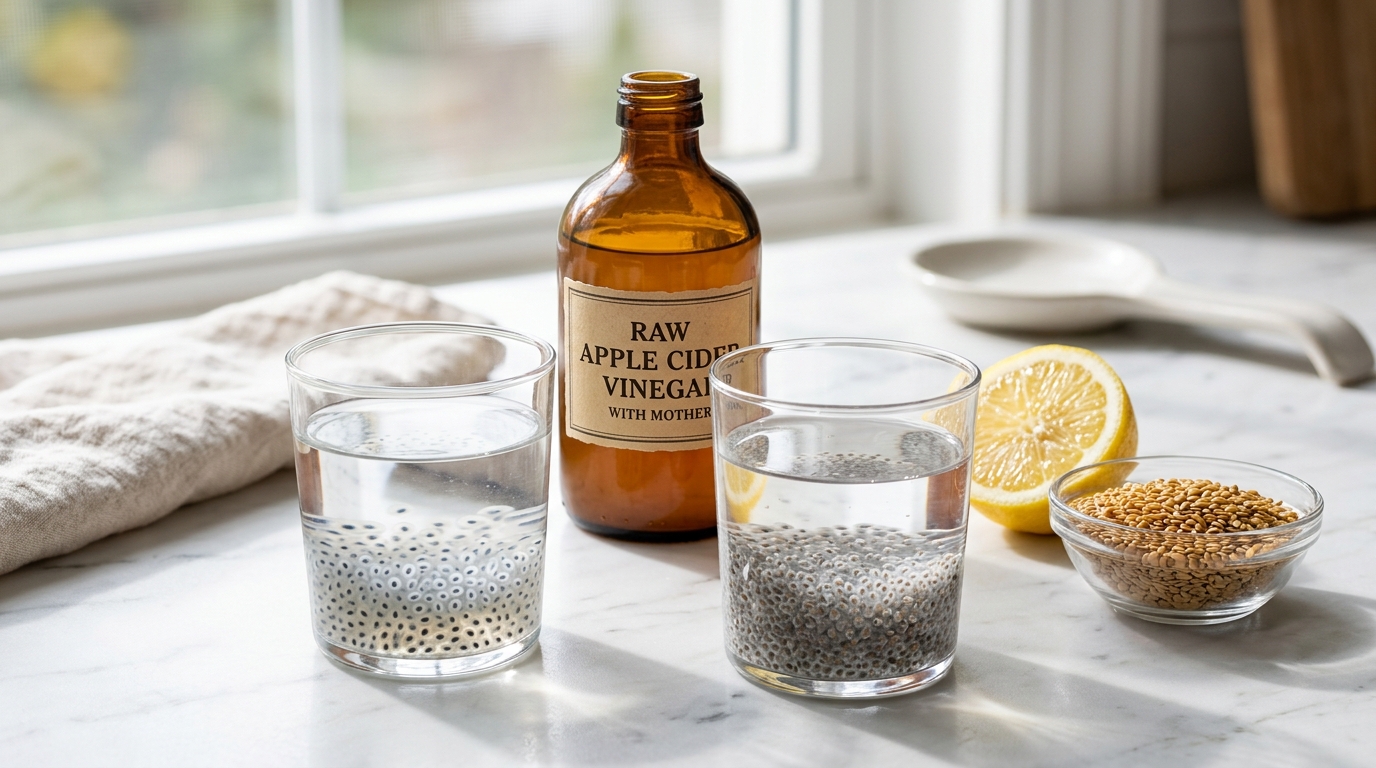
A classic morning metabolic tonic recommended across our consultations is simple: a glass of lukewarm water infused with one tablespoon of Ultimate Organic Life Raw Apple Cider Vinegar (with the Mother), half a fresh lemon, a pinch of Himalayan pink salt, and a teaspoon of pre-soaked organic chia or tokma seeds.
This nourishing beverage stimulates stomach acid production, supports liver bile flow, and provides steady satiety during your morning fasting window without breaking your metabolic state.
The Biochemical Comparison: Tokma (Basil Seeds) vs. Chia vs. Flax
While commonly grouped together as “functional seeds,” basil seeds (tokma), chia seeds, and flaxseeds possess distinct botanical, lipidomic, and polysaccharide profiles that dictate their therapeutic utility in insulin resistance:
| Seed Variety | Mucilage & Soluble Fiber Content | Omega-3 (ALA) Profile | Unique Bioactive Compound | Best Clinical Application |
|---|---|---|---|---|
| Tokma (Ocimum basilicum) | Extremely High (Swells to 30x volume in water) | Moderate (~15–18% lipid fraction) | Glucomannan-rich hydrocolloid polysaccharide | Immediate post-meal glucose blunting, cooling gastric inflammation, relieving constipation. |
| Chia (Salvia hispanica) | High (Swells to 12x volume in water) | Very High (~60% of total fat is ALA) | Chlorogenic acid, caffeic acid, quercetin | Long-term vascular endothelial protection, systemic anti-inflammatory lipid support. |
| Flaxseed (Linum usitatissimum) | Moderate-to-High (Arabinoxylan & Rhamnogalacturonan) | Very High (~55% of total fat is ALA) | Secoisolariciresinol diglucoside (SDG Lignans) | Estrogen receptor modulation, prostate and breast tissue protection, lowering LDL-P. |
The Golden Preparation Rules to Avoid Adverse Complications
Functional seeds offer immense metabolic benefits, but improper preparation can cause serious adverse events:
- Never Consume Dry Seeds Followed by Water: Tokma and chia seeds absorb up to 30 times their dry weight in fluid. Swallowing dry seeds followed by drinking water can cause them to expand inside the esophagus, creating life-threatening mechanical esophageal impaction. Always soak them fully in liquid for a minimum of 15 to 20 minutes until a complete gelatinous halo is formed before ingestion.
- Always Grind Flaxseeds Fresh: The human digestive tract lacks the enzymes necessary to break down the hard cellulose outer hull of whole flaxseeds; swallowing whole flaxseeds results in them passing through the intestines undigested with zero nutrient absorption. Grind whole flaxseeds in a coffee grinder immediately before consumption to prevent rapid oxidation of fragile omega-3 fatty acids.
- The Synergy Formulation: In the JK Lifestyle clinical protocol, we combine 1 teaspoon of pre-soaked organic chia seeds, 1 teaspoon of pre-soaked tokma, 1 tablespoon of Ultimate Organic Life Raw Apple Cider Vinegar (with the Mother), and a pinch of Ultimate Organic Life Himalayan Pink Salt in 300ml of room-temperature water. Consumed 15 minutes before lunch, this elixir forms a physical viscous gel barrier in the duodenum, delaying glucose absorption and stimulating natural GLP-1 satiety signaling.
Frequently Asked Questions
Does tokma lower blood sugar in diabetes reliably enough to replace medicine?
No dependable replacement effect is established. Preliminary reports do not provide a validated treatment dose or justify stopping prescribed care.
Is there a proven routine for how to take tokma daily?
No therapeutic routine is established here. Choose a suitable unsweetened preparation and follow the edible product’s directions; daily use is optional.
Is chia always better than flax?
No universal winner is established. Compare preparation, actual quantity, tolerance and the role you want the food to play.
Can I substitute flax oil for ground flaxseed?
They are different preparations. An oil does not reproduce the fibre-containing ground seed, and studies of one should not be used as proof for the other.
Must these foods be taken on an empty stomach?
The research reviewed here does not establish that requirement. Appropriate preparation and the complete meal matter more than an unsupported timing ritual.
The Bottom Line
Choose seeds as useful foods, with realistic quantities and suitable preparation. Separate fibre and texture from treatment claims, compare the whole recipe and keep expectations proportionate to the human evidence.
Book Your Lifestyle Consultation — Call 09678-242404.