

When evaluating whether is omad safe for metabolism, clinical physiology demonstrates that eating one meal a day is a powerful therapeutic tool for lowering hyperinsulinemia, but its long-term safety depends heavily on nutrient density and individual thyroid-adrenal health. The benefits and risks of one meal a day depend on the food eaten, health conditions and medicines, as well as the fasting window.
Breakfast disappears, lunch becomes black coffee, and the whole day’s food has to fit into dinner. OMAD can sound simple until hunger, training, family meals and medication all have to work around that single plate.
Health Revolution’s approach values a workable food pattern more than the number of hours you can endure without eating. Here is what the evidence can tell you, and where it remains incomplete.
Is OMAD Safe for Metabolism? What One Meal a Day Really Changes
Yes, OMAD (23:1 fasting) is a safe and highly effective protocol for short-to-medium term metabolic reset, deep autophagy, and reversing severe insulin resistance in adults, provided the single meal is rich in protein, essential fats, and micronutrients. However, practicing rigid OMAD every single day without variation can eventually downregulate thyroid hormones (T3), so it is best utilized cyclically.
- Deep Autophagy & Insulin Suppression: 23 hours of fasting depletes liver glycogen, maximizing cellular cleanup and visceral fat burning.
- Nutrient Density Requirement: Your single meal must supply adequate calories, amino acids, and minerals to prevent muscle wasting.
- Cyclical Protocol: Alternating OMAD days with 16:8 or 18:6 fasting schedules preserves metabolic flexibility and thyroid function.
| Fasting Protocol | Fasting / Eating Window | Autophagy Depth | Recommended Audience |
|---|---|---|---|
| 16:8 Fasting | 16 hours fast / 8 hours eat | Mild / Early hepatic cellular cleaning | Beginners, daily sustainable lifestyle rhythm |
| 20:4 (Warrior) | 20 hours fast / 4 hours eat | Moderate-to-high autophagy | Breaking weight stalls, persistent fatty liver |
| OMAD (23:1) | 23 hours fast / 1 hour meal | Deep whole-body autophagy | Experienced fasters; best rotated 2–3 times weekly |
1. Is OMAD Safe for Metabolism? Comparing 23-Hour Fasting Protocols
No. OMAD means concentrating the day’s food into one meal, often within a short evening window. Time-restricted eating is a broader category: an eight-hour eating window can contain several meals and is not equivalent to eating once.
The NIH overview of fasting research describes different protocols, including restricted daily eating windows and alternate-day approaches. Their results cannot automatically be combined into one claim about every fasting routine.
There are also several things a schedule may change at once. People may eat fewer calories, change their meal timing, remove snacks or alter which foods are available, making it difficult to identify the contribution of the fasting interval alone.
A headline saying that intermittent fasting “worked” therefore needs a second question: which protocol, in whom, and for what outcome? Weight change, glucose regulation, everyday functioning and long-term disease prevention are separate endpoints.
This is also why experiments in cells or animals cannot establish that human OMAD prevents cancer or extends life. They can suggest mechanisms to investigate, but they do not supply the missing long-term clinical outcome data.
2. What do studies show about OMAD and insulin resistance?
Results are mixed and do not establish an insulin-resistance treatment. One randomized crossover study in healthy, normal-weight adults compared three daily meals with one evening meal during separate eight-week periods. The researchers aimed to maintain total energy intake rather than prescribe calorie restriction.
During the one-meal condition, participants had higher morning fasting glucose and a less favourable response to an oral glucose-tolerance test. Glucose rose more and stayed elevated longer, with a delayed insulin response compared with the three-meal condition.
The result challenges the assumption that a longer fast necessarily improves every glucose measure. However, it came from a small study in healthy adults and does not prove that OMAD causes permanent metabolic damage or that every individual will respond the same way.
Meal timing and the previous evening’s intake also affect interpretation; the study cannot supply a universal verdict.
A different randomized crossover study published in 2022 studied 11 healthy, lean adults for 11 days in each condition. Participants ate either three meals or one evening meal within a two-hour window.
The one-meal condition reduced body weight and fat mass and increased fat oxidation during exercise, without an observed reduction in measured strength or aerobic performance. These are findings worth acknowledging rather than presenting the evidence as uniformly negative.
Yet 11 days cannot establish nutritional adequacy, cardiovascular safety or sustained muscle preservation over years. The study was also not a treatment trial in people with type 2 diabetes, fatty liver or established metabolic disease.
The two experiments examined different durations and measurements, so their results are not simple opposites. Together they show why “some short-term changes occurred” is a stronger conclusion than “OMAD is proven safe and optimal.”
3. Does a tighter eating window guarantee more weight loss?
No extra benefit is guaranteed. A 12-month randomized trial of time-restricted eating assigned 139 adults with obesity to calorie restriction with an eight-hour eating window or calorie restriction without that window. The timed group ate between 8 a.m. and 4 p.m., so this was not an OMAD trial.
Both groups lost weight, and the difference between groups was not statistically significant. Changes in body fat and several metabolic measures also did not establish an added advantage from the eating window under these conditions.
That does not mean timing can never help anyone. It means this study did not demonstrate extra benefit from imposing the window alongside the supported calorie-restriction programme.
It also gives no basis for assuming that shortening eight hours to one or two hours would improve the result. A more restrictive version is a different intervention, not an automatically stronger dose of a proven treatment.
If a schedule helps someone organize eating, that practical effect may be valuable. It still needs to be weighed against food intake, tolerability and sustainability rather than treated as a guarantee of greater weight loss.
4. Can one meal cover the food your day needs?
Possibly, but adequacy requires food variety, not simply feeling full. The NHS Eatwell Guide describes variety across food groups over a day or week. Vegetables, fruit, higher-fibre starchy foods, protein foods and dairy or suitable alternatives contribute different nutrients.
The challenge with OMAD is practical: all the food you intend to obtain that day must fit into one occasion. A large quantity of rice and meat may feel filling while still leaving little variety across the rest of the food groups.
Imagine the foods someone normally spreads across breakfast, lunch, a snack and dinner. Put them together as a planning exercise and consider whether that amount and variety would be comfortable and realistic at one sitting.
This does not prove that one meal inevitably creates a deficiency. It shows why a fasting target is not, by itself, a nutrition plan, and why feeling full cannot establish that every requirement has been met.
If the proposed meal regularly leaves out food groups because there is no room or appetite, the schedule needs reconsideration. Adding another eating occasion is a practical option, not evidence of poor discipline.
5. Does protein distribution matter for muscle?
Muscle nutrition involves more than saving all protein for the end of the day. In a small controlled protein-distribution study, eight healthy adults consumed similar daily protein amounts either fairly evenly across three meals or heavily concentrated at dinner.
The even pattern produced a greater measured muscle-protein-synthesis response over 24 hours. The study used a seven-day crossover design, so it measured a short-term physiological process rather than proving long-term differences in strength or muscle mass.
This is relevant when OMAD removes the opportunity to distribute protein across meals. However, the study did not directly test OMAD and cannot tell us exactly how much muscle a particular person would gain or lose on that schedule.
It also does not mean that the body can absorb only a fixed small amount of protein at one sitting. Digestion and absorption are different questions from the measured muscle-synthesis response.
For someone concerned about muscle, evaluate the total food pattern and training demands as well as timing. Our protein-intake guide provides food-planning context without making a single-meal gram target universal.
6. How can meal timing and rapid weight loss affect digestion?
An evening-only schedule may be awkward for someone whose reflux occurs at night. The ACG acid-reflux guide advises waiting two to three hours after a late meal before lying down to sleep.
For a person who returns home late and sleeps soon afterwards, concentrating food into dinner may make that advice harder to follow. The problem is the fit between meal timing and symptoms, not a claim that OMAD inevitably causes GERD.
Certain foods or drinks can also worsen reflux in some people, including high-fat foods, caffeine and spicy foods. Identify personal triggers rather than removing every item on a generic list, and do not treat persistent discomfort as proof that the fast is “working.”
Gallstones raise a different concern. NIDDK’s discussion of dieting and gallstones explains that long periods without eating or rapid weight loss can affect bile composition and gallbladder emptying in ways that favour stone formation.
This does not provide a precise gallstone risk for every OMAD routine. It is a reason to avoid combining an extreme schedule with an aggressive crash diet, especially when rapid loss or existing gallstones are part of the picture.
Losing weight quickly is not automatically a better outcome than making slower, sustainable changes. A diet’s effect on symptoms and nutritional intake matters alongside what happens on the scale.
7. Who should avoid OMAD?
Johns Hopkins Medicine’s fasting guidance advises against intermittent fasting for children and adolescents, people who are pregnant or breastfeeding, people with a history of eating disorders, and those with type 1 diabetes taking insulin.
These are not groups in which internet enthusiasm should substitute for appropriate care. An adult’s short-term weight-loss story does not establish safety during growth, pregnancy or recovery from disordered eating.
If fasting brings persistent nausea, headaches or unusual anxiety, the response should be to reassess the pattern and seek appropriate guidance. Symptoms are not a badge of success or a reliable signal of desirable metabolic change.
A suitable eating plan should protect health and ordinary functioning. There is no requirement to adopt OMAD simply because a friend, colleague or online community presents it as the most disciplined option.
8. Why do diabetes medicines need a separate fasting plan?
Skipping food does not switch off the effects of medicine. NIDDK’s discussion of fasting with diabetes identifies low glucose as a major risk, particularly with insulin and medicines such as sulfonylureas.
Reducing medication without proper instructions can create the opposite problem: high glucose and, in some circumstances, ketoacidosis. A person cannot safely solve the timing conflict by guessing which doses to omit.
Planning therefore needs to address the actual medication, its duration of action, glucose monitoring and when a fast must be stopped. Instructions must be individualized.
Hydration also deserves attention. Restricting meal frequency should not mean withholding water; notice any fluid lost when usual soups or other foods disappear.
This is why type 2 diabetes does not automatically make OMAD safe or unsafe in the same way for everyone. The treatment regimen and clinical history create materially different risks, and a self-directed experiment should not precede that assessment.
9. How should you weigh the benefits and risks of one meal a day?
Start with the practical problem you want to solve, then check whether an eating window addresses it. Frequent unplanned snacks, difficulty preparing lunch and an uncomfortable late dinner are different problems, even if OMAD is being promoted as the answer to all three.
Consider a hypothetical office worker who skips lunch because buying it is inconvenient. Preparing a simple lunch addresses that obstacle directly; removing breakfast as well creates a different experiment without resolving the original practical issue.
For another person, the attraction may be fewer decisions. Repeating a small set of satisfying meals can simplify food planning while preserving more than one eating occasion.
Judge the proposed routine by whether you can obtain appropriate food, take medication safely and participate in everyday life. A schedule that repeatedly conflicts with those needs is providing useful feedback about its fit.
Regular meals remain a valid option. You do not need to progress through increasingly long fasts to prove that you are taking metabolic health seriously.
The JK Lifestyle Blueprint for Practicing OMAD Safely
In the JK Lifestyle methodology, One Meal a Day (OMAD) is an advanced metabolic tool used to accelerate healing for individuals with persistent fatty liver, obesity, and type 2 diabetes. However, Dr. Jahangir Kabir always emphasizes that OMAD must never become chronic starvation.
When breaking your 23-hour fast, follow this golden sequence:
- Prepare Digestion: Start with a glass of lukewarm water infused with 1 tablespoon of Ultimate Organic Life Raw Apple Cider Vinegar (with the Mother) and a pinch of pink salt 15 minutes before your meal.
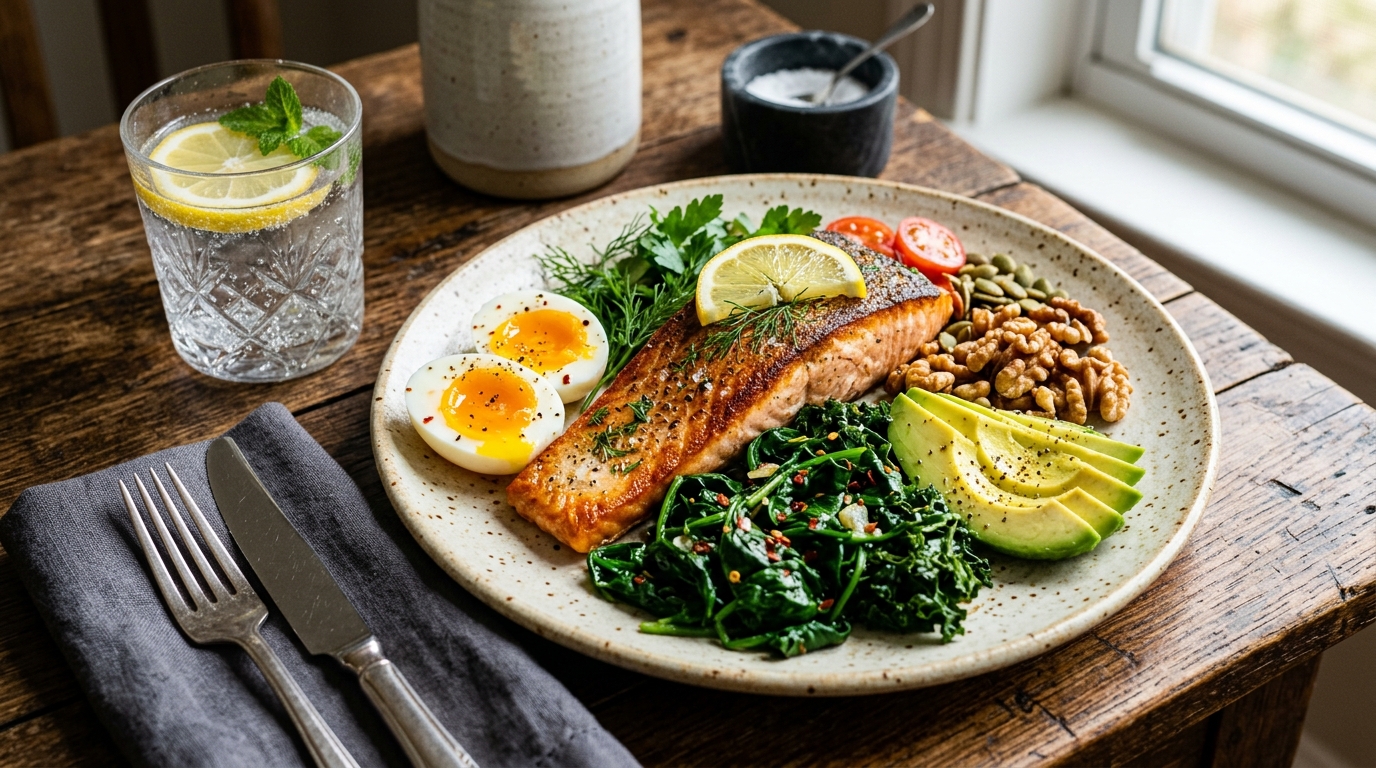
- The Nutrient-Dense Plate: Focus on high-quality proteins (pasture-raised eggs, fish, organic chicken or beef) and generous portions of low-carb vegetables sautéed in Ultimate Organic Life Grass-Fed Ghee or extra virgin olive oil.
- Healthy Lipids for Satiety: Incorporate clean fats like avocados, nuts, or coconut oil to ensure you absorb fat-soluble vitamins and feel deeply satisfied until the next day.
Stay hydrated during your fasting window with pure water, green tea, and electrolytes to prevent headaches and fatigue.
Frequently Asked Questions
Is OMAD safe for metabolism over the long term?
The available small studies do not establish permanent damage. They also do not demonstrate universal long-term safety or superiority.
Does research on OMAD and insulin resistance prove reversal?
No. Small studies with different glucose findings cannot establish that treatment claim for people with insulin resistance or diabetes.
Can OMAD help someone lose weight?
It can, as the short 2022 study illustrates. That does not prove it is better than other workable eating patterns over the long term.
Can I try OMAD while taking diabetes medicine?
Do not start without an individualized medication and monitoring plan. Both low glucose and inappropriate dose reductions can create risks.
Who should avoid OMAD even if weight loss is the goal?
Restrictive fasting is unsuitable for children, pregnancy, breastfeeding, eating-disorder history and people with type 1 diabetes taking insulin. Weight-loss goals do not remove those concerns.
The Bottom Line
OMAD changes far more than the time on a clock: it changes how food, medication and daily life fit together. Choose an approach that meets your needs, with the limits of the evidence clearly understood.
