
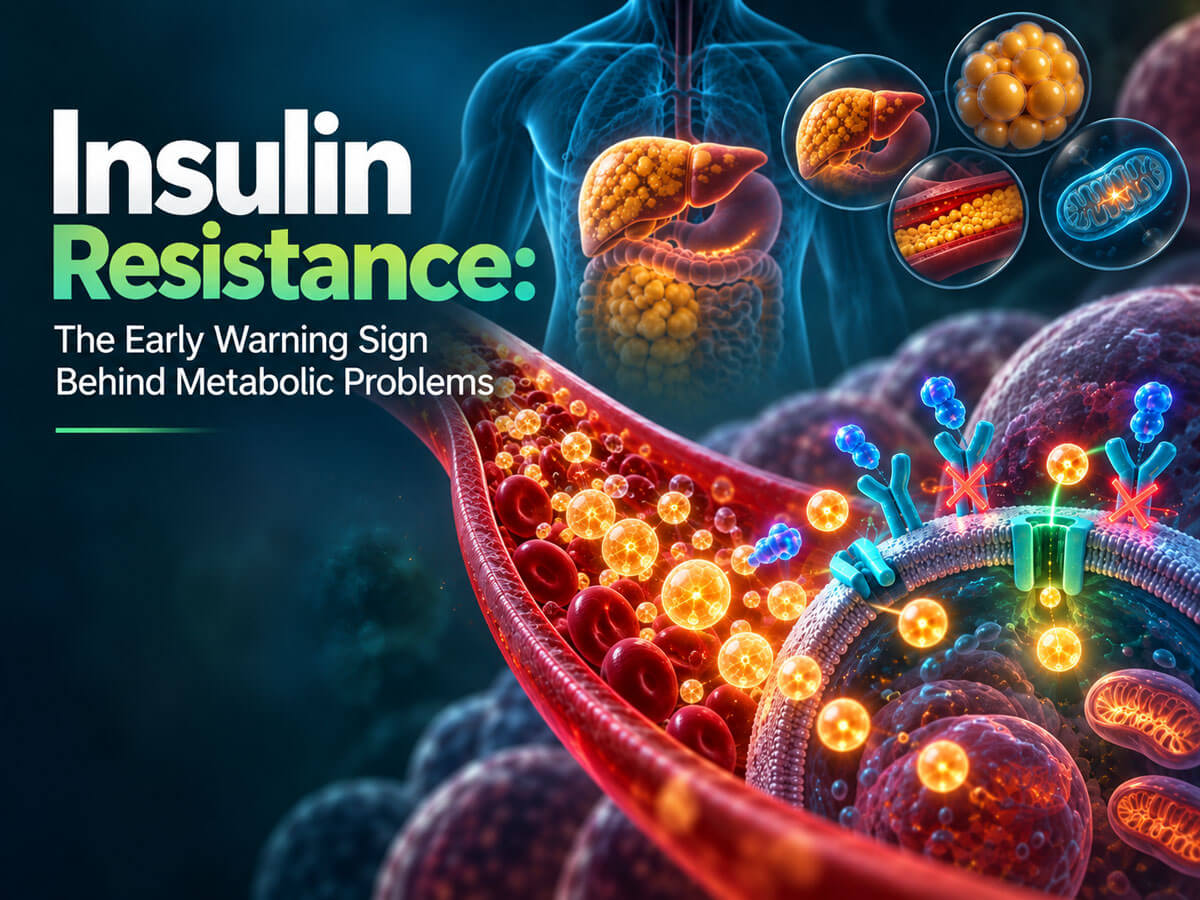
Can you have insulin resistance even when your blood sugar is normal? Yes. Your body may be producing extra insulin to keep glucose within the normal range.
A normal result is reassuring. But if you also have fatty liver, a growing waistline or a family history of diabetes, those details deserve attention together.
Insulin resistance means your body responds less effectively to insulin. It can develop quietly, before you notice symptoms or receive a diabetes diagnosis.
If that sounds important, you deserve to understand how they may be connected. Let us look at what that means for your health.
What Is Insulin Resistance?
Insulin is a hormone made by your pancreas. It helps regulate blood glucose, including helping muscle and fat cells take up glucose for energy or storage.
With insulin resistance, muscle, fat and liver cells respond less effectively to its signals. The pancreas may compensate by producing more insulin. For a while, that can keep blood glucose normal.
If compensation becomes insufficient, blood glucose can rise into the prediabetes or diabetes range. This progression is not inevitable. NIDDK explanation
Insulin has an essential job. The aim is to help your body respond to it appropriately.
Why Several Metabolic Problems Can Appear Together
Perhaps one report mentions fatty liver. Another shows high triglycerides. Your blood pressure needs attention too.
It is understandable to feel overwhelmed. Looking at these findings together can help explain the care you need.
Finding or condition | How it connects |
Prediabetes and type 2 diabetes | Blood glucose can rise when insulin production no longer adequately compensates for reduced responsiveness. |
Metabolic fatty liver | Insulin resistance and excess liver fat commonly occur together and can reinforce each other. |
High triglycerides, low HDL and raised blood pressure | These can cluster with increased waist size and elevated glucose as metabolic syndrome. |
Polycystic ovary syndrome, or PCOS | Insulin resistance is an important contributing factor, although PCOS involves several mechanisms. |
Metabolic syndrome increases the risk of diabetes, heart disease and stroke. PCOS also deserves assessment beyond blood sugar alone. NHLBI guidance, international PCOS guideline
These connections help guide care. Each condition still needs appropriate assessment and treatment.
You May Feel Well—So What Deserves Attention?

Insulin resistance usually has no obvious symptoms. Feeling energetic or looking slim cannot establish how well your body responds to insulin.
A family history of diabetes, excess abdominal fat, low physical activity, previous gestational diabetes and PCOS are reasons to discuss your risk with a clinician. Some medicines and other medical conditions also contribute. NIDDK risk factors
Some people develop dark, thickened, velvety skin around the neck or armpits, called acanthosis nigricans. This deserves assessment, but cannot confirm the diagnosis by itself. Cleveland Clinic overview
Likewise, tiredness, cravings or sleepiness after lunch have many possible explanations. A symptom checklist cannot tell you the whole story.
How Do You Find Out What Is Happening?
Start with your history and existing reports. Bring your medicine list too.
Your clinician may assess blood pressure, waist measurement and blood lipids alongside glucose testing:
- Fasting plasma glucose measures blood glucose after an overnight fast.
- HbA1c reflects average blood glucose over roughly three months.
- An oral glucose tolerance test assesses your response to a glucose drink when appropriate.
These tests help identify abnormal glucose regulation. They do not directly measure every aspect of insulin resistance. Routine direct testing for insulin resistance is uncommon. NIDDK testing guidance
If your assessment includes fasting insulin or a HOMA-IR calculation, ask how the result affects your care. It needs clinical interpretation alongside your other findings.
You deserve an explanation of what a test means and what action follows.
Can Early Lifestyle Changes Make a Meaningful Difference?
Yes. Strong human research supports acting before diabetes develops.
The Diabetes Prevention Program randomly assigned 3,234 high-risk adults to an intensive lifestyle programme, metformin or placebo.
The lifestyle programme included dietary changes, a weight-loss goal and at least 150 minutes of activity weekly, supported by regular contact with the study team. Over approximately three years, it reduced diabetes incidence by 58% relative to placebo. Diabetes Prevention Program
That figure describes reduced diabetes incidence, not a percentage cured of insulin resistance.
The support matters too. Participants had help putting changes into practice.
Bringing the Health Revolution Approach Into Your Day

At Health Revolution, daily habits are considered together through healthy eating, regular exercise, sufficient sleep, mental peace and individually appropriate fasting.
Begin With Familiar Meals
Look at your usual lunch. Is there enough room for vegetables and protein?
Try vegetables such as lau, bhindi and leafy greens alongside fish, eggs, chicken or pulses. Review oversized rice portions, sweet tea and biscuits eaten without much thought.
Whole-grain black rice, quinoa or buckwheat can add variety; unpolished brown rice is another option. Portion awareness still matters. Choose whole fruit more often than juice and make unsweetened drinks your usual choice. CDC meal-planning guidance
Give Movement a Regular Place
Begin with activity you can manage. Build towards at least 150 minutes of moderate activity weekly, with strengthening activities on two days. Break up long periods of sitting too. NHS activity guidance
Could a family member join your walk? Company can make the habit easier to keep.
Protect Sleep and Make Space to Unwind
Choose a realistic bedtime routine. Persistent loud snoring, breathing pauses or marked daytime sleepiness deserve assessment for sleep apnoea. NHLBI sleep apnoea guidance
For mental peace, make room for prayer, quiet time or supportive conversation. A workable plan should accommodate your responsibilities and difficulties.
Consider Fasting Individually
Fasting may suit some people. A small controlled trial found improved insulin sensitivity with early time-restricted eating in eight men with prediabetes, but that does not establish one schedule for everyone. Human fasting study
Discuss suitability first, particularly if you take insulin or medicines that can cause low blood sugar. Never change medication yourself. NIDDK hypoglycaemia guidance
Questions About Insulin Resistance
Yes. Extra insulin production can compensate for reduced responsiveness. Your risk factors and broader assessment help put a normal result in context.
No. Insulin resistance describes a reduced response to insulin. Prediabetes describes blood glucose above normal but below the diabetes threshold.
Yes. Nutritious eating, regular activity and appropriate weight management can help. Fasting is optional, and weight-loss advice should reflect your starting health. Cleveland Clinic treatment guidance
Some people may need treatment adjustments as their health improves. That decision belongs with your prescribing clinician. Continue prescribed treatment while working on your habits.
Start With Understanding Your Own Health
Bring your reports, questions and everyday routine into the same conversation.
Choose a manageable change and arrange appropriate follow-up. At Health Revolution , that conversation can help you understand where to begin and how to build a plan around your life.
